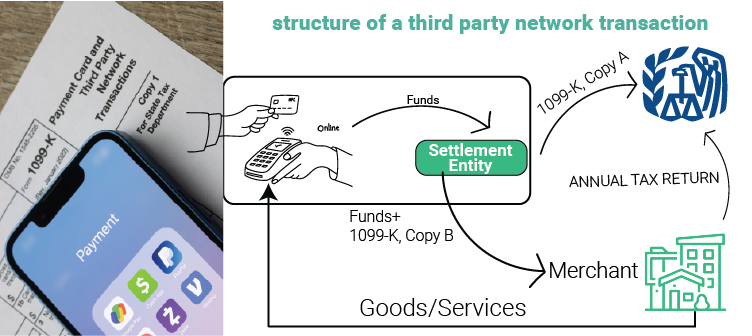
2.1. Form 1099-K Reporting Changes

Form 1099-K
IRS PDF


QR Code for Form 1099-K PDF

Scan or click to open PDF
About 1099-K
IRS Form Page


QR Code for About Form 1099-K

Scan or click to view
1099-K FAQs
IRS General Info


QR Code for IRS Form 1099-K FAQs

Scan or click to view
FS-2025-08
IRS Fact Sheet


QR Code for IRS Fact Sheet FS-2025-08

Scan or click to open PDF

Third-party network transaction reporting


TY2026 Tax Law Update

Form 1099-K Reporting Changes

For Tax Year 2026 returns filed in 2027, preparers should understand the updated reporting rule for payment card and third-party network transactions. Form 1099-K reporting affects taxpayers who receive payments through platforms, apps, and online marketplaces.


What Changed?

The law reinstates the exception for third-party network transactions when the taxpayer has 200 or fewer transactions and total payments do not exceed $20,000. This moves Form 1099-K reporting away from the lower $600 threshold for many third-party network payments.


Applies To

  • Payment card transactions
  • Third-party settlement organizations
  • Online marketplaces
  • Payment apps used for goods or services


Preparer Focus

  • Ask clients about platform income.
  • Do not rely only on whether a Form 1099-K was issued.
  • Separate business income from personal transfers.
  • Reconcile 1099-K amounts to client records.


Practitioner Tip

A Form 1099-K is an information return, not a tax calculation. The amount reported may include gross receipts before fees, refunds, chargebacks, or personal transfers. Preparers should use client books and records to determine the correct taxable income.


Common Mistake

Do not tell a client that income is not taxable simply because no Form 1099-K was received. Taxable income must still be reported even when an information return is not issued.