1.0 Module Overview and Learning Objectives
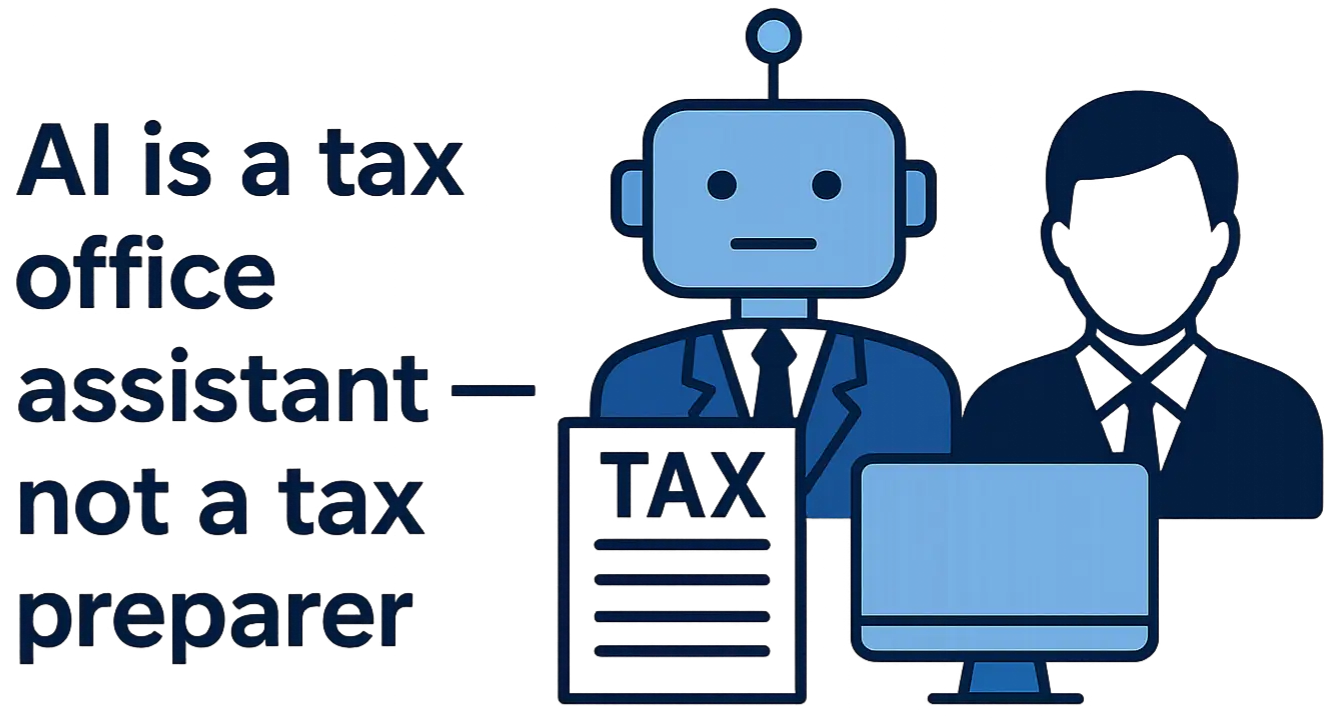
Artificial intelligence tools are reshaping how tax offices operate — from drafting client letters to summarizing new guidance. But before any practitioner can use AI safely and productively, they need to understand what it actually is and how it works. Module 1 builds that foundation in plain language. No coding knowledge required. What you need — and what this module delivers — is a clear understanding of what AI tools can do, what they cannot do, why they make mistakes, and why those mistakes carry real professional consequences for every return you sign. This module establishes the course’s central principle: AI is a tax office assistant, not a tax preparer.
Learning Objectives
After completing this lesson you will be able to:
Module 1 Lesson Map
|
Lesson |
Topic |
What You Will Learn |
|---|---|---|
|
1.1 |
What Is Artificial Intelligence? |
How LLMs work, training cutoffs, pattern prediction vs. fact retrieval |
|
1.2 |
Types of AI Tools Available to Tax Practitioners |
General-purpose, tax-specific, document analysis, voice AI — what each is good for |
|
1.3 |
The Hallucination Problem |
Why AI fabricates citations, wrong numbers, and outdated law — with real examples |
|
1.4 |
Why AI Cannot Be a Tax Preparer of Record |
PTIN requirement, Circular 230 obligations, §6694 liability — all fully apply |
|
1.5 |
The Guiding Principle: AI as Office Assistant |
The framework that runs through every module of this course |
|
Quiz |
Module 1 Review |
10 questions covering all Module 1 lessons |
Most practitioners pick up AI tools the same way they pick up any new software — open it, start using it, figure it out as they go. That approach works fine for a word processor or a spreadsheet. It does not work for AI — because the failure mode of AI is invisible. A word processor does not fabricate a tax code section. An AI tool does. And it does so in fluent, well-formatted, confident-sounding prose that gives no indication that anything is wrong.
The practitioners who use AI effectively are the ones who understand this risk before they start — not the ones who discover it after a client return is wrong. Module 1 gives you that understanding. Everything else in the course builds on it.